
Terminators, Dogs, and Skills
Could your salespeople pass an industry cocktail party test? Could your marketing copy? Inspired by the dogs in Terminator, I built an AI skill to flag writing that sounds like it came from an industry outsider.

I have a test that I used to give my vertical salespeople: if I dropped you into an industry cocktail party, how long could you last before someone figured out you didn’t work in the industry?
The A+ outcome was that, after 20 minutes of talking with (for example) a group of senior publishing executives, someone would ask, “So, Larry, what publisher do you work for?” Larry would reply, “Oh, I don’t work for a publisher. I work at a software company that serves the media industry.”
That was the standard. Larry understood their world well enough that they assumed he belonged to it. He could follow the conversation, ask good questions, talk at a business level, and contribute something useful without revealing through his language or assumptions that he came from somewhere else. That he was an outsider.
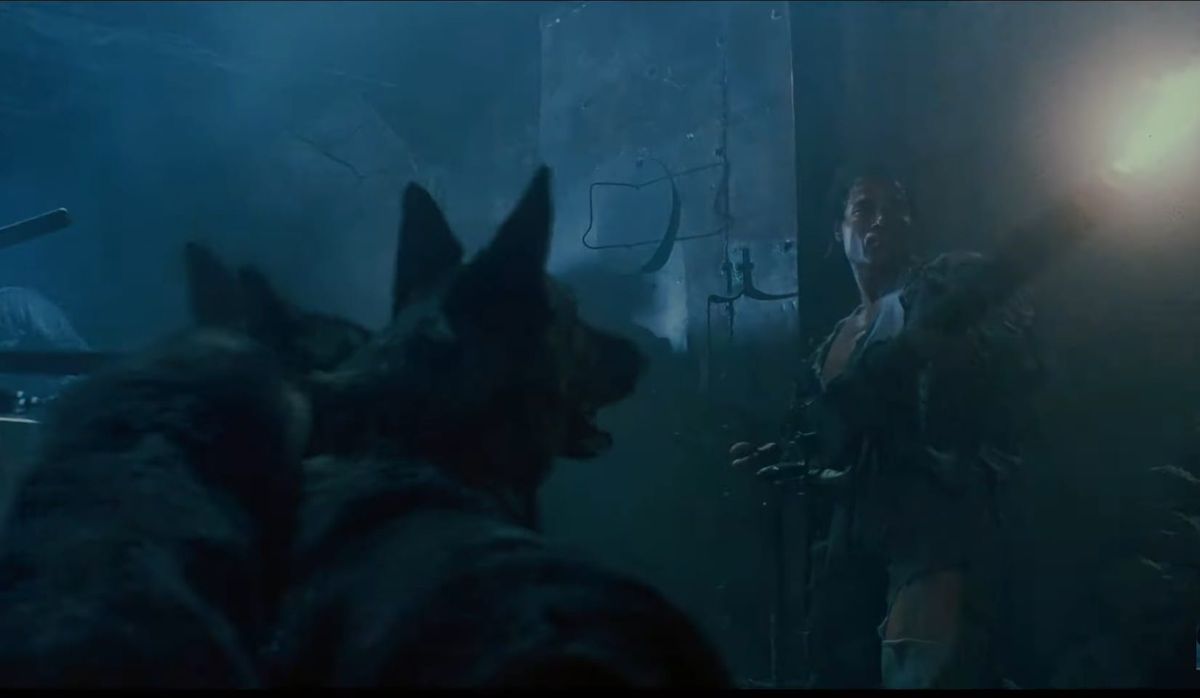
Which brings me to dogs and Terminators. Remember the original Terminator movie? In the dystopic future, humans hid underground while machines controlled the surface. Terminators were built to infiltrate those hideouts, and they were getting harder and harder to distinguish from humans. But dogs could tell. When a Terminator showed up, the dogs started barking.
Think of your salesperson as the Terminator and your customers as the dogs. That’s the cocktail party test. How long can your seller talk to them in an informal environment before the dogs start barking?
Woof-sider, woof-sider!
Why does this matter? Because, as a chat with a CMO the other day reminded me, in vertical sales, “nuance is everything.” You need to speak their language. You need to fully understand their problem. “We need to see and then communicate the non-obvious patterns that connect them to each other. You need to be able to use reference customers in the same industry – always critical to vertical sales – even when there are superficial differences, but deeper commonalities, in their use-cases.”
I’ve always said that in vertical sales you want to complete the customers’ sentences when they are describing their problem. You want the customer to think, “heck, these people not only understand my problem, they might understand it better than I do.” You win by demonstrating understanding of the problem.
Let’s think about how one fails the cocktail party test:
- Some people get busted before they open their mouths. The clothes, the look, something gives them away.
- Others get busted during introductions. At a DoD or IC event someone might introduce themselves simply as "Mike." Knowing not to ask their surname is part of knowing the room.
- Some get busted by their vocabulary. They use an unfamiliar term, misuse a familiar one, or sound like a software person talking about healthcare instead of a healthcare person.
- Some miss the social context. They don’t know where people gather, what they read, or whom they listen to. Or they cite someone as an authority whom the people in the room don’t respect.
- Others get the priorities wrong. They enthusiastically explain how to solve a problem that nobody particularly cares about, while overlooking the problem that keeps everyone up at night.
But then my CMO friend said something that surprised me: “and that’s why I still want to review every piece of industry copy that we produce.” And that’s where skills entered the conversation.
Getting a salesperson through the cocktail party test takes hiring, training, and practice. But reviewing written copy suggested an AI solution: building a skill that flags passages likely to make the dogs bark.