What Mr. Jambo and Levi's Can Teach Us About Listening to Customers
A parody song and Levi’s ill-fated entry into suits illustrate a common mistake: listening to customers, then interpreting their words to fit the strategy you already wanted to pursue. Before deciding what they really meant, consider that they meant exactly what they said.

Founders, chief product officers (CPOs), and chief marketing officers (CMOs) spend a lot of time talking with and listening to customers. As they should.
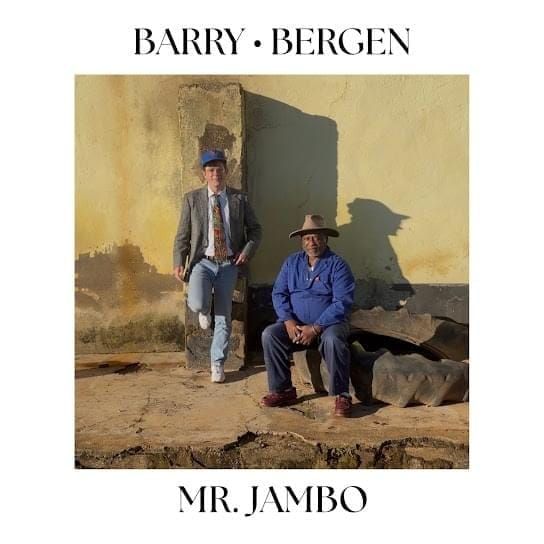
And, by and large, they do it well. But there's one common mistake that many smart, strong-willed, and vision-driven leaders make. Surprisingly, I think it's illustrated perfectly by a Kyle Gordon parody song, Mr. Jambo, featuring Barry Bergen, a fictional, oblivious American tourist traveling through Africa in the 1980s. [1]
If you haven't seen it, Barry is traveling in Africa in search of spiritual wisdom. He meets Mr. Jambo, who says something in Zulu:
"Angikhulumi isiNgisi, unaye umhumushi? Yeka ukuklabalasa!"
Barry doesn't speak a word of Zulu. But he's convinced he knows exactly what Mr. Jambo meant.
“Well, I couldn't speak his language, I couldn't even understand a word
But I knew the meaning was what I decided I had heard.”
And what Barry had decided he had heard becomes the chorus:
"The love you seek is in the valley of the soul. The love you seek is in the wisdom written on the ancient scrolls."
Subtitles reveal what Mr. Jambo actually said:
"I do not speak English. Do you have an interpreter? Stop yelling at me!"
Barry went to Africa looking for ancient wisdom and he's darn well going to find it. So when he encounters a language that he doesn't understand, his mind conveniently supplies the message he was hoping to receive.
“But I knew the meaning was what I decided I had heard.”
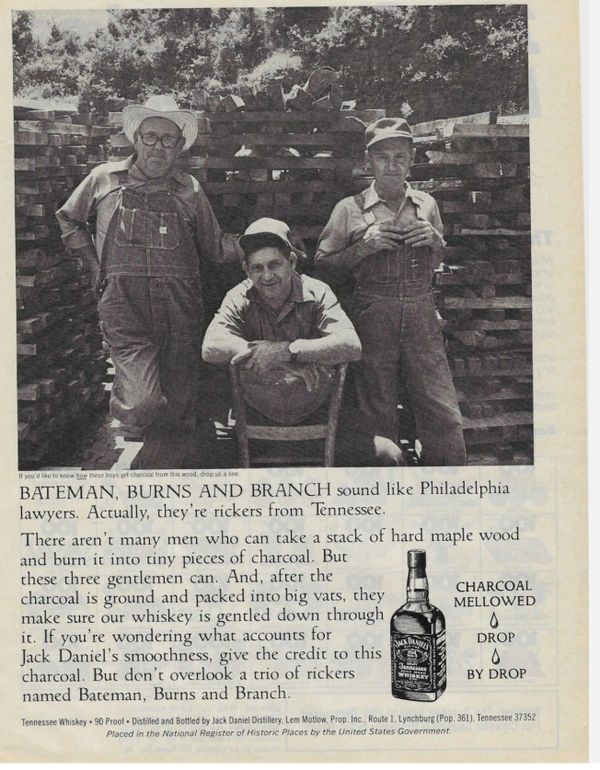
I suspect you know where I'm headed with this. But first, we need to revisit a business school case I studied decades ago that made a lasting impression on me: Levi's ill-fated attempt to enter the men's suit market with its Tailored Classics line.
What made the case so memorable wasn't just the product or the strategy—it was the accompanying video. It didn't simply show the focus groups; it also showed the Levi's executives standing behind the one-way mirror, watching customers react in real time.
You have to watch this Levi’s video for several reasons. First, it's a wonderful time capsule of the 1980s, when focus groups were filmed like mysterious psychological experiments. Second, you'll hear Levi's customer segmentation, which is unintentionally hilarious. Third, it's (yet another) classic example of a company stretching its strategy far beyond its core.
Most importantly, though, watch what happens behind the glass. As the customers talk, the marketing executives make exactly the same mistake as Barry Bergen. They knew the meaning was what they decided they had heard.
The customers were surprisingly clear. They said they liked Levi's jeans. They believed Levi's could probably make a perfectly good suit. But they didn't want to wear one. A suit wasn't just another article of clothing. It was something they wanted tailored, and it was something they didn't want associated with a casual denim brand. The moderator's conclusion was equally clear: if Levi's wanted to enter the market, it should start with slacks and sport coats because the Levi's brand simply wasn't credible in suits.
Then the executives started talking.
The customers said they didn't want Levi's making suits. The moderator concluded that the Levi's brand was the obstacle. The executives concluded that once customers saw how good the Levi's suits were, the Levi's image would change.
Nobody thought they were ignoring the customers. They thought they were interpreting what the customers meant.
Maybe they were right. Maybe the customers really did mean, "If only Levi's made a better suit, we'd buy it." But if that was the hypothesis, it should have been tested. The moderator could have asked a follow-up question. Another focus group could have been run. The surveys could have included open-ended questions designed to probe the issue more deeply.
Instead, the interpretation conveniently aligned with the strategy the company already wanted to pursue.
Interpretation is an essential part of market research. Customers aren't always articulate, and they often propose impractical solutions. But before you reinterpret what they said into something that fits your strategy, your roadmap, or your worldview, consider another option. Ask another question. Probe deeper. Run another focus group. Add an open-ended question to the survey.
Because you need to consider the possibility that what the customer meant is exactly what they said.
I opened this post by describing founders, CPOs, and CMOs as smart, strong-willed, and vision-driven. Ironically, those qualities make this mistake more likely, not less. Smart people are good at constructing explanations. Strong-willed people have convictions they want to defend. Vision-driven people naturally interpret new information through the lens of the future they're trying to create.
So the next time you find yourself mentally translating what a customer is saying into something more compatible with your existing beliefs, stop and ask yourself:
Am I Barry Bergen? Am I standing behind the glass with the Levi's executives? Is that me?
Notes
[1] There are several layers of parody at work. Barry Bergen isn't a real musician, but a fictional American tourist from the 1980s created by comedian Kyle Gordon. Gordon is known more for parodying entire musical genres (e.g., Planet of the Bass spoofing 1990s Eurodance) than individual songs. But Mr. Jambo is an obvious nod to Paul Simon's Graceland. Even the title is part of the joke: "jambo" is simply "hello" in Swahili, but Barry mistakes it for the man's name. To make things even better, Mr. Jambo doesn't speak in Swahili – he speaks to Bergen in Zulu instead. Use this prompt in your favorite LLM to get an analysis of the satire:
Analyze Kyle Gordon's Mr. Jambo in depth. Go beyond explaining the lyrics and identify every significant layer of parody, satire, cultural reference, and musical reference in the piece. Discuss the parody of Paul Simon's Graceland, the fictional Barry Bergen persona, the satire of the "clueless American tourist" trope, the joke behind calling someone "Mr. Jambo," the use of isiZulu instead of Swahili, the mystical "Africa as spiritual enlightenment" stereotype, and any other jokes, references, or historical/cultural allusions that a typical listener might miss. Explain why each layer is funny, what or whom it is mocking, and how the different layers reinforce one another.