Board Meetings: Your Notetaker Is Not Welcome Here

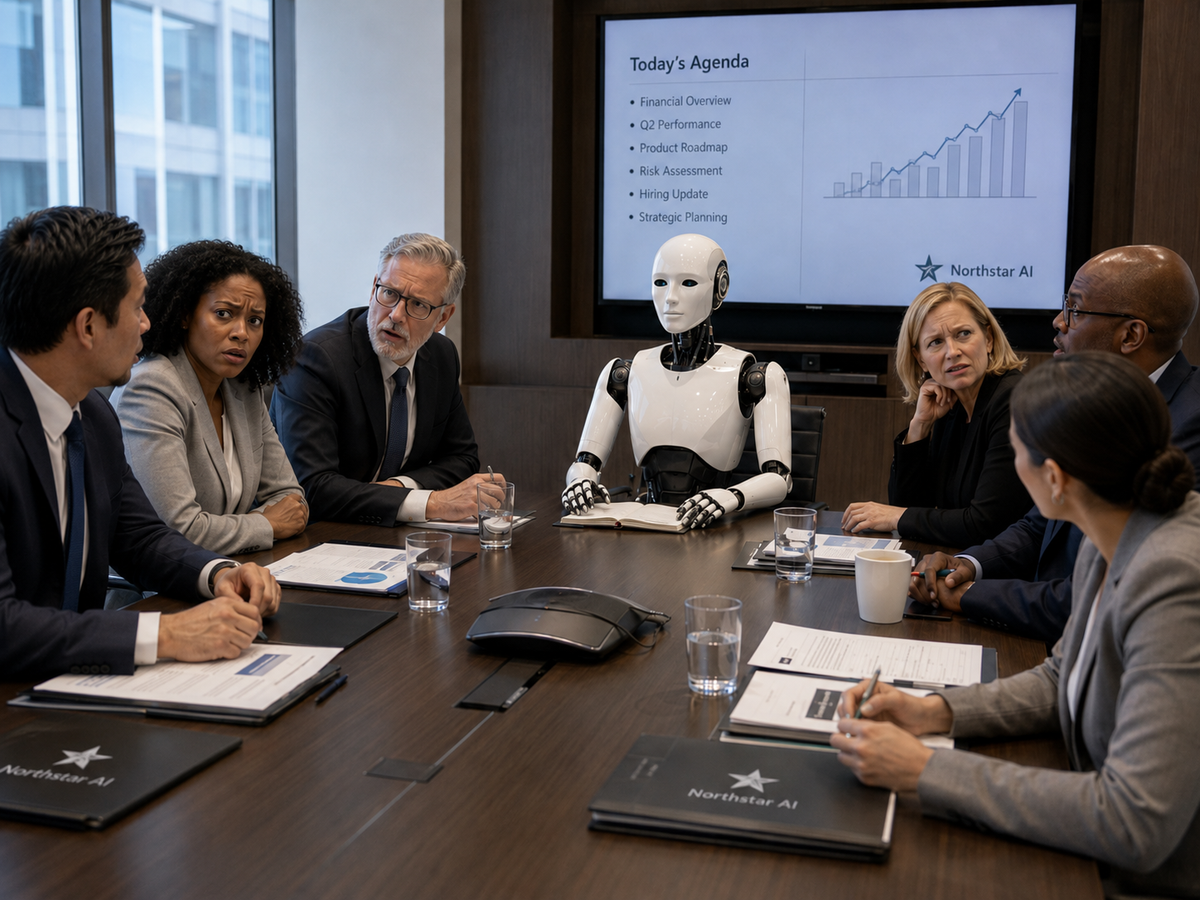
In an era where it seems that every conversation is being recorded, there should be a sign outside every board meeting that reads: “Your notetaker is not welcome here.”
By “your notetaker,” I mean any AI notetaker. A personal one that follows you from meeting to meeting – whether a meeting bot, native AI notetaker, pin, band, or pendant. The company’s official one, launched by the person hosting the meeting. Or, one operated on behalf of the corporate secretary or chairman.
None of them belong in the room.
There should be no transcript of a board meeting that a lawyer will one day discover – and try to use against the company – because no such transcript should ever have been created.
Let’s Back Up a Minute
To understand why, let’s first review what board meeting minutes are supposed to do.
I explored this topic in depth several years ago in a Balderton post entitled The Why and How of Good Board Meeting Minutes.
The purpose of board minutes is to document that the board did its job. The meeting was properly called. A quorum was present. The right topics were discussed. The directors reviewed the relevant materials, asked questions, made decisions, and approved any required resolutions.
Good board minutes are therefore largely metadata about the meeting. They record who attended, what subjects were covered, what materials were reviewed, what decisions were made, and what resolutions were approved.
That’s why American-style minutes often look like this:
The CFO presented an update on the company’s financial performance and outlook. The board asked several questions. A discussion ensued.
What questions did the directors ask? What concerns did they raise? Who argued which side? What alternatives were considered and rejected?
The minutes generally don't say. That omission is deliberate.
Good board minutes document the board's process and decisions. They are not a transcript of the board's deliberations, nor are they intended to help you reconstruct the conversation that occurred.
Once you understand that idea, you understand why AI notetakers have no place in board meetings.
One Meeting, One Official Record
An AI notetaker doesn’t simply help create the minutes. It creates a second, far more detailed record of the meeting.
You now have the carefully drafted, reviewed, and approved board minutes and a transcript or AI-generated summary that attempts to capture everything everyone said.
Which is the real record?
The minutes may say that management presented a proposed acquisition, the board asked questions, and a discussion ensued. The AI transcript may contain 45 minutes of objections, speculation, devil’s advocacy, incomplete thoughts, misunderstood comments, and arguments that directors deliberately advanced to test the proposal.
That second record isn’t better minutes. It is a different artifact — one that should never have been created. (And almost certainly wouldn't be reviewed.)
It doesn’t matter whether the notetaker belongs to an individual director or was officially installed by the company. Either way, it creates an alternative record of the board’s deliberations. If such a record exists and if the legal circumstances warrant it, that record will be discoverable and have to be produced.
People Know It’s There, or They Don’t
If you welcome an AI notetaker at a board meeting, you are in one of two situations: the participants know it’s there, or they don’t.
If they don't know, you're secretly recording the meeting. Depending on where the participants are located, that may create legal issues (because recording laws vary by state). But – legal issues aside – it undermines the trust that good board meetings require.
If they do know, then participants will think about it.
They will wonder how their comments will appear in the transcript. They may hesitate before asking a naïve question, floating a half-formed idea, playing devil’s advocate, challenging the CEO, expressing dissent, or changing their minds. They will start managing the record instead of helping the board reach the right decision.
That interferes with the purpose of the meeting. A good board meeting should be a frank discussion among directors. People need to say what they think, challenge each other, test arguments, and explore alternatives without treating every sentence as potential testimony.
A board meeting is supposed to produce good decisions, not an optically perfect record of every statement made while reaching them. Trying to create the latter will interfere with the former.
Cooley Agrees
You don’t need to take my word for it. Cooley recently published a refreshingly direct article entitled AI Note-Taking in the Boardroom (Don’t Do It).
They identify six reasons AI notetakers should not be used in board meetings:
- Confidentiality and data security. Board meetings involve highly sensitive information that should not be unnecessarily sent to cloud services or third-party providers.
- Accuracy and context. AI systems may misinterpret sarcasm, intentionally vague statements, nuance, or off-the-cuff remarks, turning them into misleading formal records.
- Attorney-client privilege. Sending privileged discussions through an AI system may put that privilege at risk.
- Lack of editorial discretion. A human preparing minutes uses judgment about what belongs in the official record. An AI notetaker tends to capture everything.
- Reduced candor. Directors who know everything is being recorded may self-censor, avoid difficult questions, or become reluctant to express dissent.
- Regulatory and litigation exposure. Anything recorded may later become discoverable. Cooley compares an AI notetaker to putting a court reporter with no filter in the boardroom.
I agree with all six.
But the first-principles argument is even simpler. Board minutes are deliberately designed to document the meeting without reproducing it. An AI notetaker is deliberately designed to reproduce the meeting.
It is the wrong tool creating the wrong artifact in the wrong room.
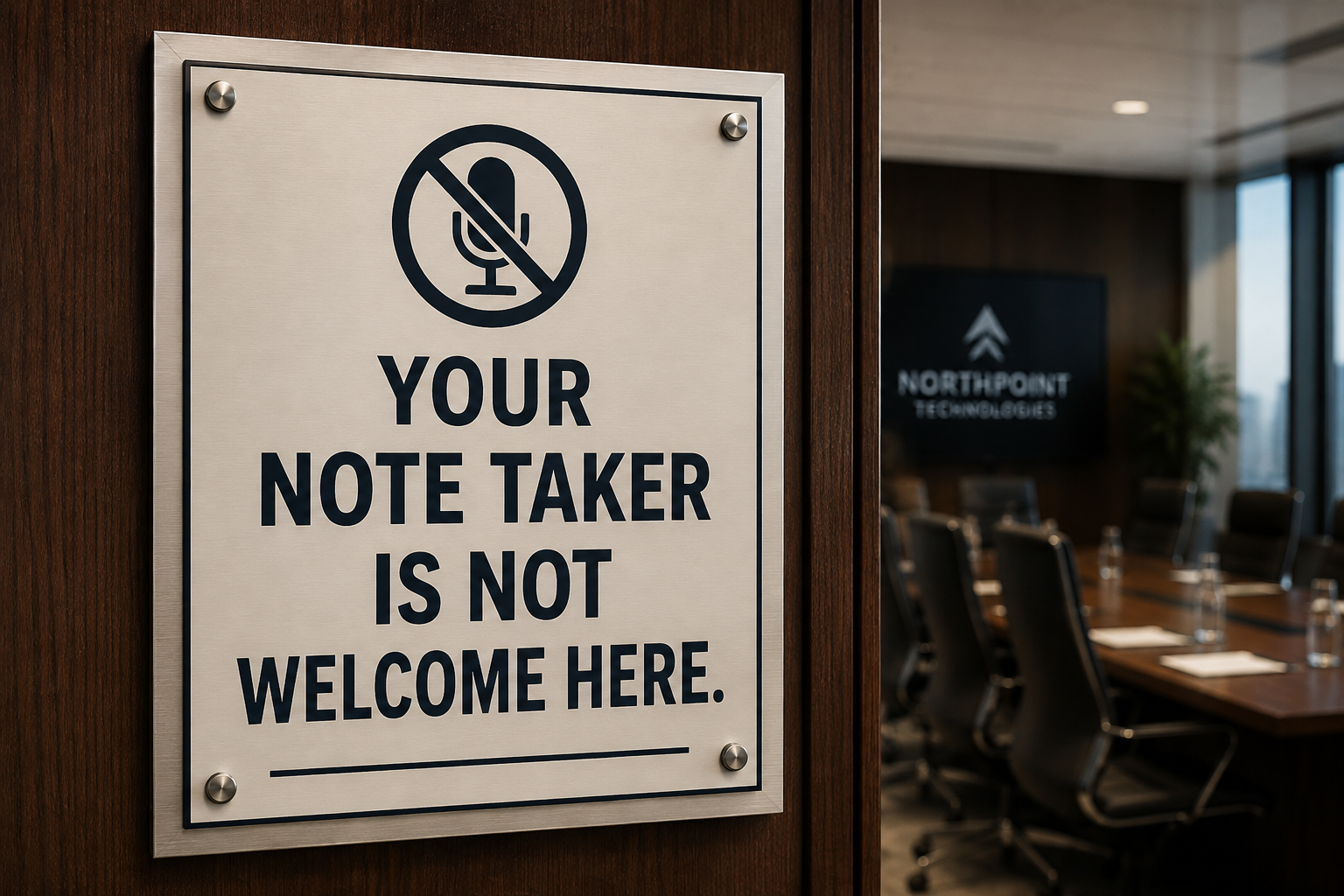
So put up the sign:
Board Meetings: Your Notetaker Is Not Welcome Here.
Not yours. Not the company’s. Not anyone’s.